Phase 9: Scaling
Letting go
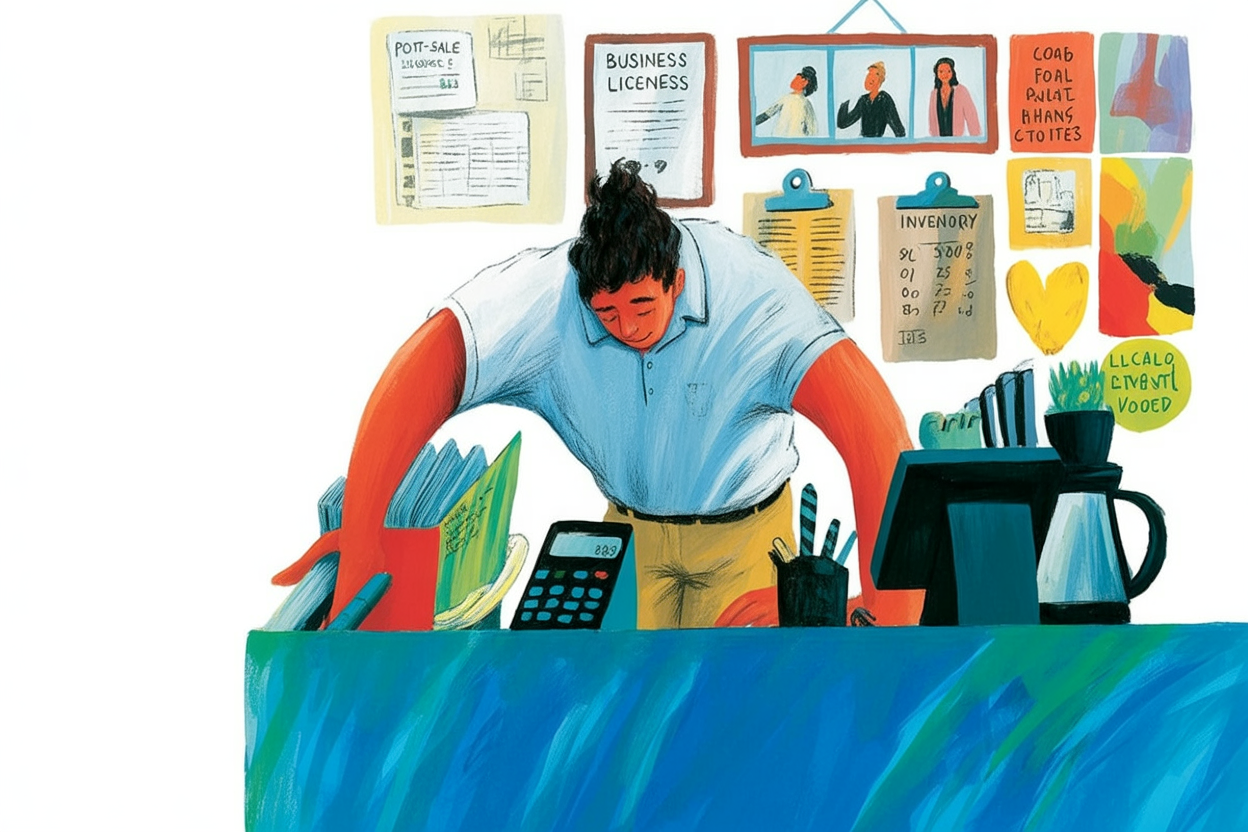
Scaling means the company outgrows you.
This was one of the hardest transitions for me. Also the most rewarding.
What actually needs to happen
You've been the person who:
- Talks to every customer
- Makes every decision
- Fixes every bug
- Owns every outcome
That stops now. Not because you want it to, but because it has to.
If the company's growth is limited by your personal capacity, you haven't scaled anything. You've just created a well-funded version of yourself.
Scaling requires:
-
Hiring people who are better than you
This is genuinely hard. You've been the best at everything so far. Now you're hiring someone better at sales. Someone better at ops. Someone who sees problems you don't. -
Documenting processes
Everything you do by instinct needs to become a process someone else can follow. Your instincts don't scale. -
Trusting your team
They'll make different decisions than you would. Some will be better. Some will be worse. Both teach you something. -
Stop making every decision
You hire a VP of Product. They'll want to ship features you wouldn't. Let them. If it's wrong, you learn. If it's right, you learn even more.
The identity crisis
The hardest part isn't operational. It's psychological.
For years, you were the company. Your expertise, your vision, your instincts.
Now you're one person in an organization. A leader, yes. But not the doer.
This feels like losing control. It is losing control. And it's necessary.
What you actually do now
As a scaled founder, you:
- Set the vision (not the tactics)
- Hire leaders (not do the work)
- Make the big strategic bets
- Protect the culture
- Spend time on what only you can do
Everything else, you delegate.
If you're the one debugging code, you're not scaling.
If you're the one responding to customer emails, you're not scaling.
If you're the one making feature decisions, you're not scaling.
The metrics that matter now
- Revenue growth rate (are you actually scaling?)
- Customer acquisition cost trending (is it manageable as you grow?)
- Team retention (are people staying?)
- Revenue per employee (are you getting more efficient?)
- Product velocity (are releases getting faster or slower?)
If these numbers are improving, you're scaling right. If not, something's broken.
When you know it's working
The business runs without you being in every meeting. A customer has a complex problem and your team solves it without asking you first. You take a week off and nothing burns down.
A new product launch happens and you hear about it in standup, not because you directed it. These are the signals that you've actually built something that scales.
The bittersweet reality
You'll miss it sometimes.
Miss the days when you knew every customer by name. When your decisions mattered directly. When you could see cause and effect immediately. That was meaningful. And it's also why you couldn't grow beyond it.
Scaling means trading direct impact for leverage.
You know you're ready for the next phase when:
- Your company is operating without daily input from you
- Your team makes decisions you didn't make but would endorse
- You're thinking months and years ahead, not weeks
- Revenue and metrics are growing predictably
The company becomes bigger than the founder.
And that's when you truly have something.